Skip to content

Posts from the ‘Recipes’ Category

Lucky Coins

I decided to skip last month’s ñoquis del 29 post on a leap year technicality.  Picking up in March, I decided to make cornmeal ñoquis baked in béchamel.  I had never associated ñoquis with Cuban cuisine but, after finding several references in a few older Cuban cookbooks, I wanted to try it.  The cooked cornmeal is shaped into small discs then baked with white sauce or cheese and put under a broiler.  Though not like any ñoquis I’d had before, I thought their similarity to gold coins fitted with the Argentinian tradition of putting a coin or peso under your plate while you ate them to attract greater prosperity.  I was a little up in the air about doing another one and questioned whether I really wanted to make ñoquis again so soon. As with most resolutions, the first time is all zeal, the second time may be a fluke, and the third time is when you decide whether or not to stick to it.  After some starts and stops, I realized that I looked forward to answering the same question in a different way every month.  Hopefully, with some consistency, I can be consistently lucky. Read more
Frida’s Fiestas

A few months ago a friend recommended Frida’s Fiestas: Recipes and Reminiscences of Life with Frida Kahlo.  Written by her step-daughter Guadalupe Rivera and Marie-Pierre Colle, it’s part cookbook and part food memoir.  Organized by month, each chapter centers on the holidays and seasons as they were celebrated in the Blue House in Coyoacán.  Describing a trip with Frida to the pyramids of San Juan Teotihuacán, the author writes:

After offering us the traditional refreshment of agua de chía, doña Rosa invited us to eat.  She had prepared a number of Lenten dishes typically served throughout the central Mexican plain, where the gods that Frida invoked in her paintings had once upon a time resided.  As it turned out, doña Rosa and don Tomas extended their hospitality to us for three more days, days in which reality was inseparable from magic. Read more

Albóndigas de Pesach

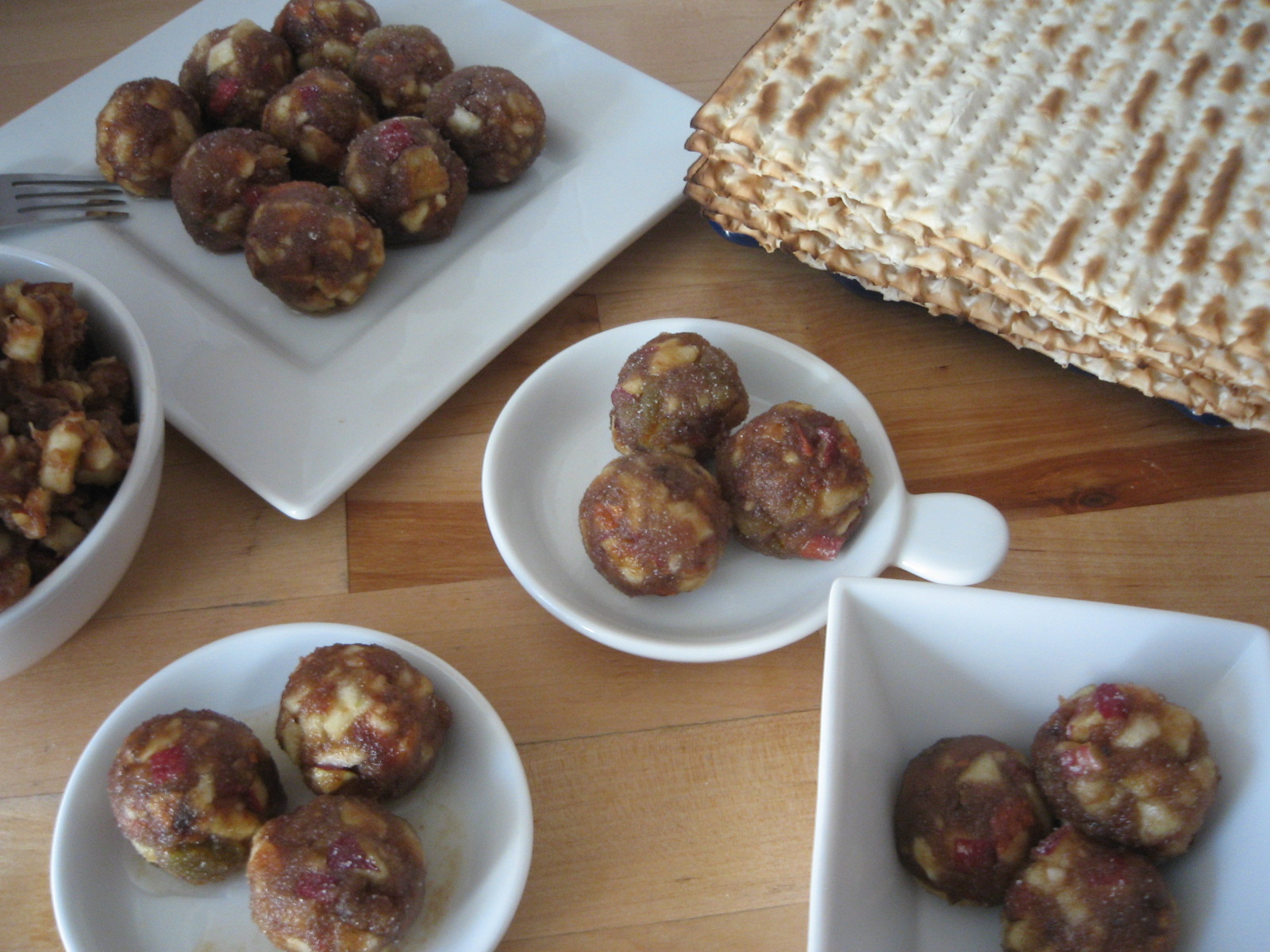
I’ve always been superstitious about throwing away keys.  It could be a tiny gold key to a tweenage diary, an extra hotel key I forgot to return, or a loose spare to a forgotten door in a past dorm, house or apartment.  I’ll be ready to toss it then have a last minute misgiving that makes me put it back in the drawer, giving in to the anxiety that I’ll be faced with a lock I can’t open.  That’s probably why I was so fascinated when I heard about Jewish families in Spain who kept the keys to their homes after the expulsion of the Jews in 1492.  A poignant detail in a larger history that’s always stood out in my mind. Convinced it was a misguided policy of Queen Isabella’s that would soon be corrected, they kept their keys with them.  Another story I heard soon after that’s very popular, is about a man who stopped by a local bar in Toledo to ask directions to the house where his family had lived five hundred years before.  Sent to a nearby address and carrying the key they had saved, he came back a few minutes later, shaken, only able to get out the words, it worked. Read more

Spring Forward

I didn’t realize what a hard winter we were having until it got warmer this week and everything became SO much easier.  I was in a neighborhood shop the other day when someone asked what I’d been up to.  My mind drew a complete blank – I couldn’t remember what I’d been up to because I felt like I’d just woken up.  We’ve been so storm tossed the past couple of months that it felt like winter was having us.  It’s been weeks of face down, boots on and scurrying from one place to another.  All that changed overnight – which it always does though I always forget.

Read more

Butifarrón Sabroso

I hadn’t thought of meatloaf as Latin food until recently.  Butifarron, carne fria, albondigas, it was all there I just didn’t make the connection to the heavy cafeteria slices we’d get at school or the bacon wrapped loafs served at a friend’s house.  When I found this recipe for butifarrón sabroso in Puerto Rican Cookery, I couldn’t wait to make it.  Last week I gathered all of the ingredients and put it together quickly.  I ended up with a smooth loaf floured and ready to…fry? Read more

Just Once More

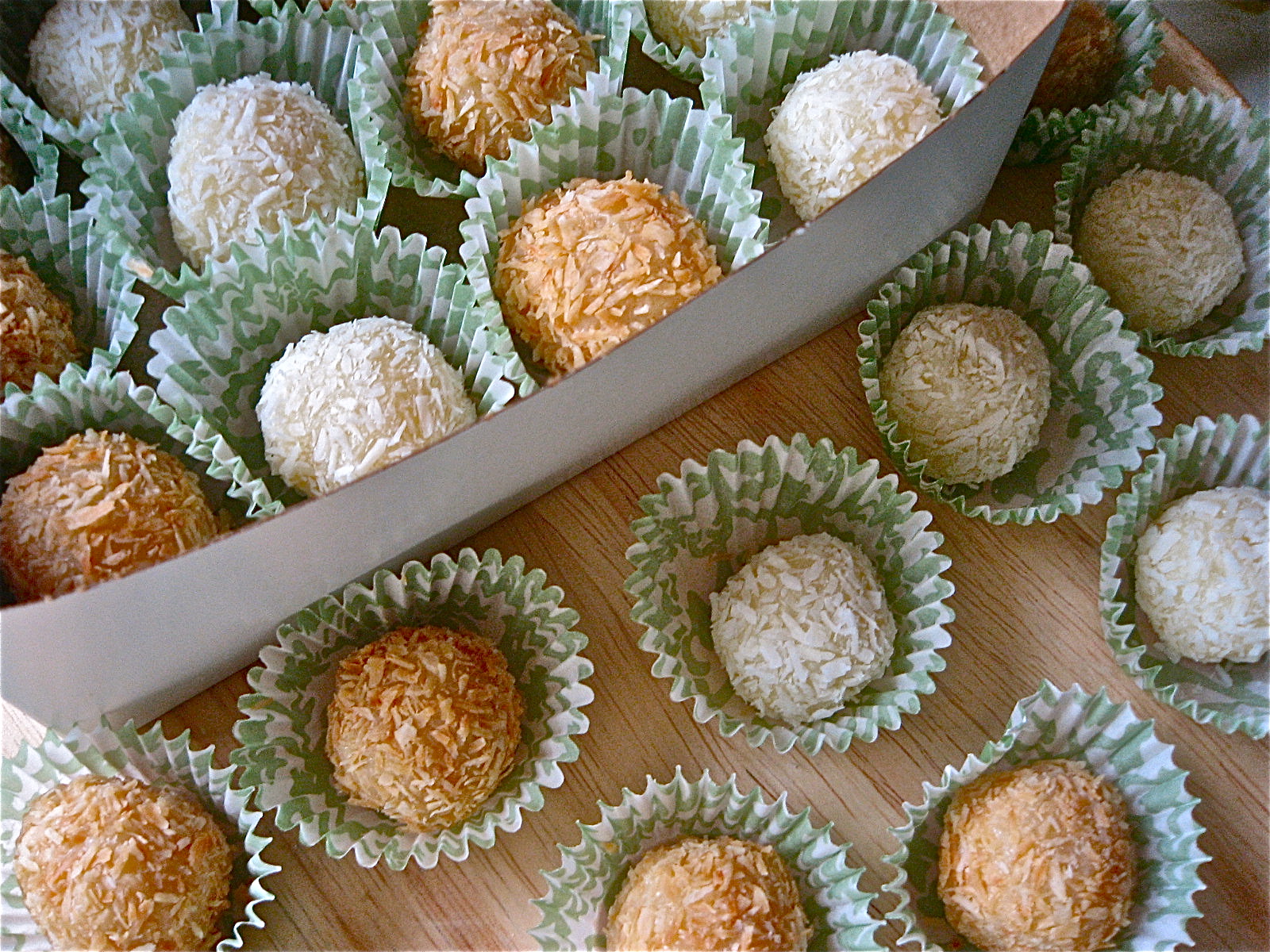
I’d been burned before.  Last summer I found an old recipe for Brazilian coconut candies called  brasileiras.  I put all the ingredients together as directed – egg yolks, freshly shredded coconut, sugar – but they wanted nothing to do with each other.  I Googled “brasilerias” to find my mistake but the results were (not surprisingly) unhelpful.  A few weeks later, I attempted beijinhos de coco or “coconut kisses”. Similar to the brasileiras, they’re a combination of condensed milk, butter, and grated coconut that are rolled into balls and decorated with a single clove.  This version called for a final dip in chocolate and almonds.  I should have known when I wasn’t able to form the coconut into balls, mounds or anything like it that I’d made a mistake somewhere.  I kept going anyway, making an expensive chocolate almond mess.  I pretended they were edible, but after a day or two, I stopped kidding myself and threw the rest away.  I hadn’t looked a coconut in the eyes since. Read more

Ritual and Repetition

A couple of weeks ago, I attended a talk at my Brooklyn’s Book Court between Thomas Keller and Peter Kaminsky.  Though technically about Keller’s latest cookbook, Ad Hoc at Home, it wasn’t strictly about food and cooking.  From process and baseball analogies, he got to ritual and repetition and I realized what I’d been missing.  Trying to post regularly, I’d become sharkish, cooking in constant motion.  I’ve gotten used to being just a few clicks away from French-Italian-Regional-Seasonal-Indian-Mexican-Caribbean.  It’s tempting to jump from one to the other, trying everything once then moving on.  Having set out to write about traditional food in a new medium, I forget that the best part can be going back, trying again, and making it a little better.  I had ritual, but my repetition was lacking.  Read more

Olive Oil Pancakes

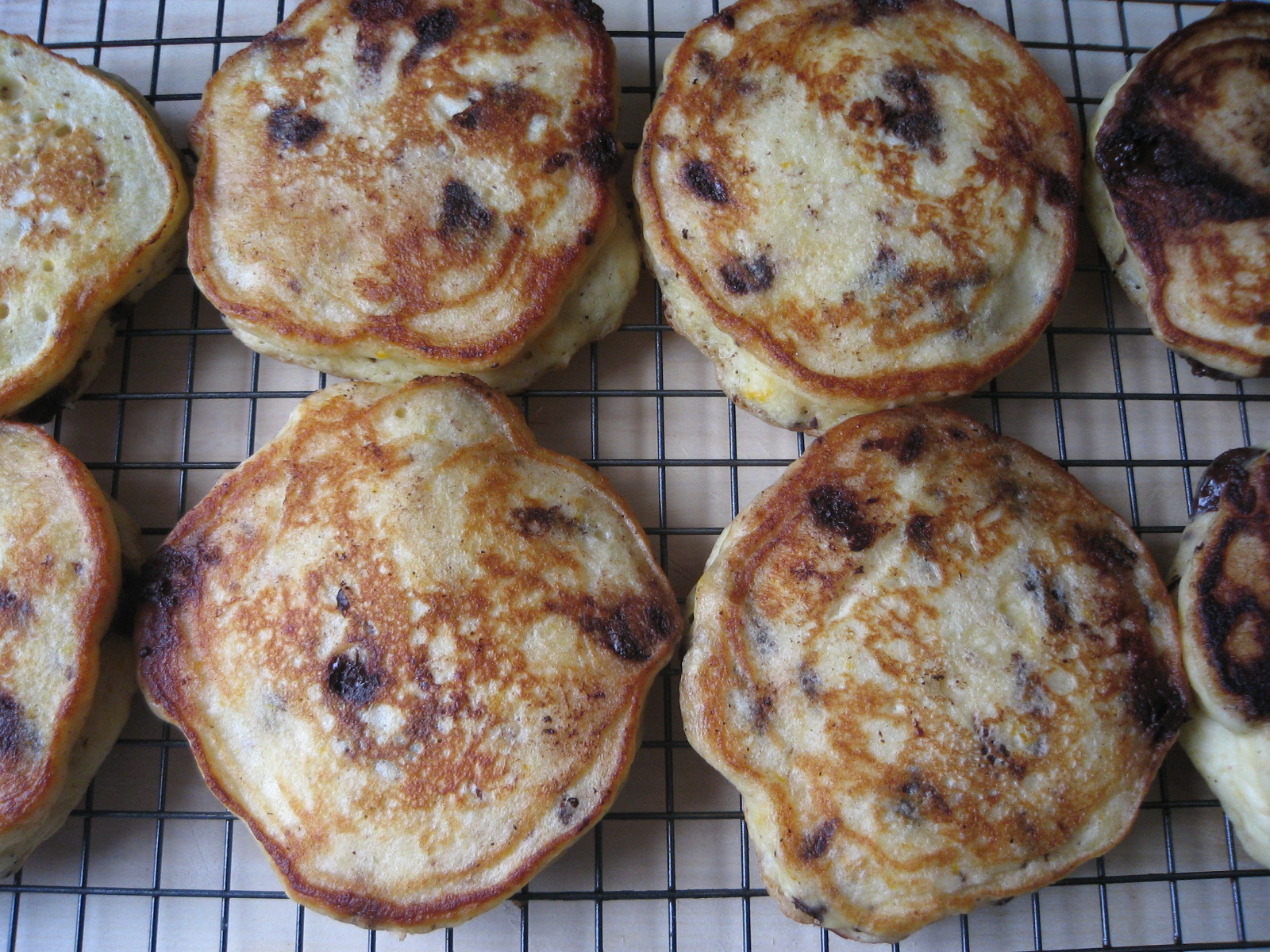
I was flipping through José Andrés’ Made in Spain when I came across a recipe for olive oil pancakes.  I’ve been on a pancake tear lately and was intrigued by his emphasis on Spanish products to make all-American pancakes – olive oil, chocolate, and honey.  I’d always preferred Spanish olive oil, but I had never thought about Spanish chocolate.  That morning, I found a 2 kilo bar of dark artisanal chocolate from Aragon at the Co-Op.  I don’t know how I could have missed it , it was enormous.  I heaved it into my bag and headed home.
Read more

Frituras de Malanga

I bought the malanga by mistake.  I’d considered adding it to my garbanzos last week but left it out at the last minute.  Not wanting to let it go to waste, I decided to try making fritters instead.  I’d stopped by a friends house unexpectedly when he was finishing a batch for salt cod fritters, and it looked so easy and simple that I wanted to try this variation.  They’re the kind of last minute side dish that could be whipped up in a few minutes.  I looked through a few different recipes that were very similar – malanga, eggs, a little garlic, maybe parsley.  Reading A Taste of Old Cuba, I was reminded that frying 0f any kind was always left for last so that the fritters, plantains or croquetas could be served hot and crisp, never greasy .  I hadn’t thought about it before but realized that I do associate the crackle and sizzle of frying with a great meal about to be had – a little music drawing everyone to the table. Read more

Last Call

Life inside the snow globe is pretty but it’s February and I’m tired of feeling (and looking) like a nesting doll.  It’s the final day of Carnival in Rio and I’m not there.  It’s hard to believe that there are people thinking, not about how many layers they can wear under their overcoat, but how many feathers they can get on their headdress – a headdress and little else.  I looked for coverage of the parades that have been going since Saturday but haven’t found very much.  While I hate to miss out, I love knowing that there are still events so wonderful, people don’t stop to upload.  Hoping to bring a little bit of carnival to my site, I asked a Brazilian friend for any good recipes made for the festival.  Her answer was immediate and simple – caipirinhas – the fuel behind the celebration and apparently, the unusually high November birth rate in Brazil.  As she put it, it is a country of Scorpios.

A combination of limes, sugar, and cachaça, the Brazilian liquor made from fermented sugar cane, you can also use vodka to make a caipiroskas or light rum for a caipiríssima.  I briefly considered holding my glass out the window for a caipisnowcone.  However, you mix it, it’s worth the Fat Tuesday effort lest you wake up on Ash Wednesday all repentance and no sin. Read more