Archive for the 'Venezuela' Category

That’s No Lady

IMG_4487

I have a regrettably low tolerance for alcohol.  Typically, I’ll sip a mojito till it’s watered down to nothing or nurse a light Mexican beer most of the night.  I’m that girl.  So it’s odd that I’ve spent this week spiking sorbet with cava, getting a lobster drunk on rum, and now drizzling lady fingers with vermouth and yet more rum for a Bien Me Sabe,  a Venezuelan dessert made of lady fingers layered with coconut cream.  Whenever I have people over, I always go to Latin Chic written by my friend Isabel González-Whitaker and co-author Carolina Buia.  Living in the neutral territory of New York City where everyone is from somewhere else, it’s full of simple but great ideas to add a cultural twist that’s honest to entertaining in Latin American style.  Looking for a dessert to bring to a dinner party, I used their recipe for Bien Me Sabe or “It Tastes Good to Me”.  This one in particular comes from Carolina’s great aunt Mercedes Camps.  The legend goes that she made it for Venezuela’s future president Rómulo Betancourt when he was hiding from political adversaries in her home.  It’s hard not to admire a woman who not only offers refuge and food to those in need but then throws in dessert.  After three weeks, she smuggled out the father of Venezuelan democracy disguised in one of her dresses. Continue reading ‘That’s No Lady’

Universo Venezuela

Venezuela

I was happy to hear that Miss Venezuela had won the Miss Universe title for a historical second year in a row.  Though I don’t follow the pageant and can’t speak for the universe, they do seem to want it more than any other country.  I think it was seeing this in the news that reminded me of a Venezuelan restaurant I had wanted to try for a few weeks.  When I read in the New York Times about the patacón Maracucho served in El Cocotero, I felt deprived.  Having grown up on fried plantains, Continue reading ‘Universo Venezuela’

Venezuelan Treasure

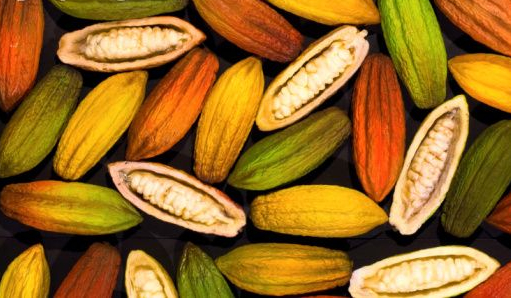
While I often hear about Venezuela’s petroleum industry, it’s less common to read about their cacao plantations.  That’s why I was so interested in this New York Times article by Simon Romero, In Venezuela, Plantations of Cacao Stir Bitterness.  I was fascinated by how cacao like oil becomes a mixed blessing.

Cocoa Fruit

Milking a Coconut

IMG_3515

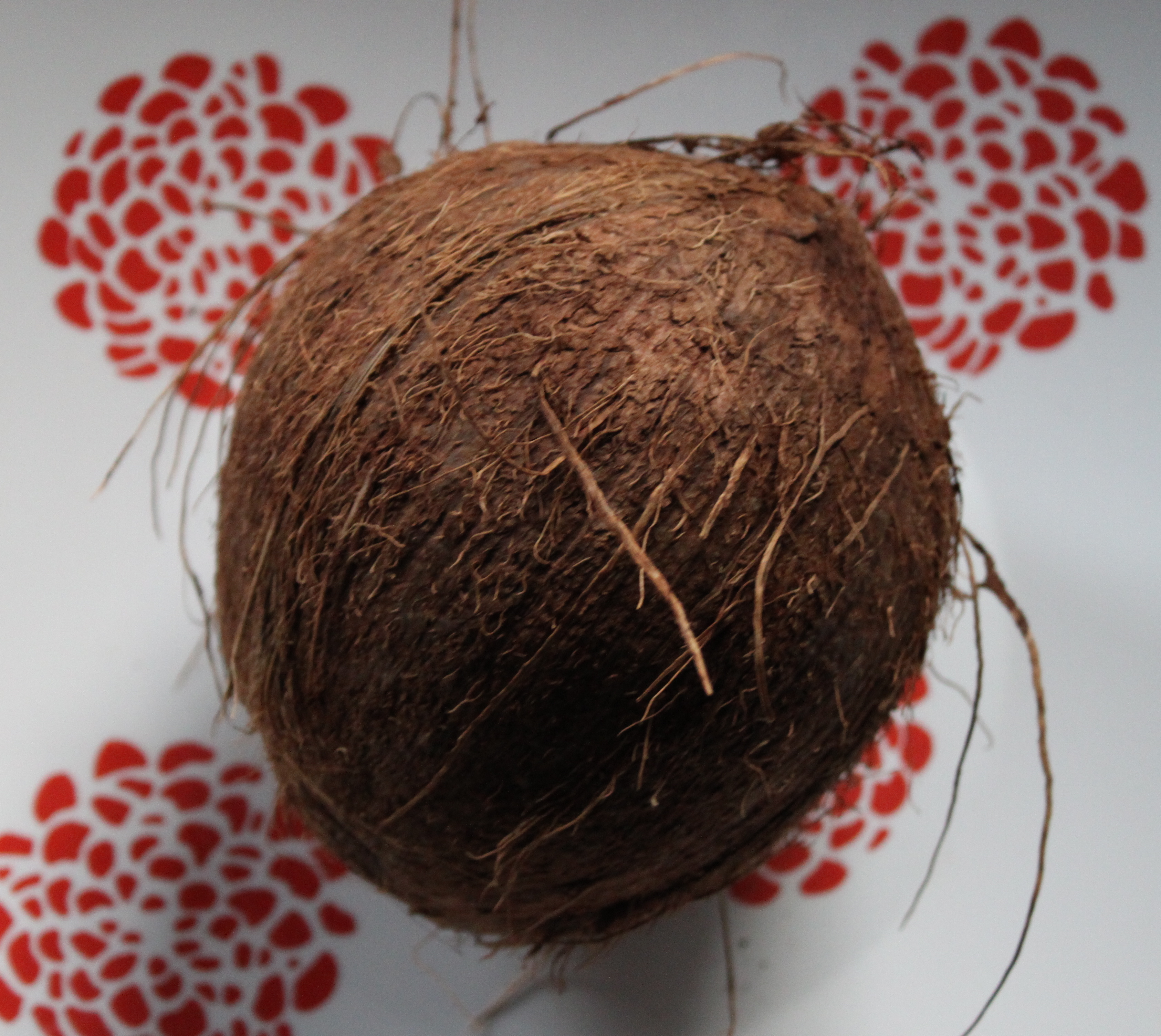
I was looking at different dessert recipes when my cousin sent me one for a Venezuelan bienmesabe, a coconut custard cake that required me to crack open and extract the milk.  Picturing hammers and machetes and emergency room visits, I thought she was crazy if she thought I was going milk my own coconut.  My next thought was where in New York to find them.

In Miami this would not be a problem.  Though Miami Beach has become unrecognizable in many ways, it’s still possible to see men pushing grocery carts of fresh green coconuts along red hot sidewalks.  With one balletic move, they’ll swing a giant machete to cut a tiny hole just big enough for a slender straw for a coco frio.  Fresh or dry, I knew my best chance was Essex Market in the Lower East Side.  I found them straightaway at Batista Grocery.  The clerk helped me pick out a few by shaking them to make sure they had water inside and offered to crack them open for me to be sure that the meat inside was still fresh.  For a moment, I was tempted.  It would be so much easier, but I was decided and it seemed a shame not to go through with it.  After all, it was a  pretty common kitchen technique before we were all hooked on cans.  So here are some pictures along with a few things I learned by milking my own coconut… Continue reading ‘Milking a Coconut’

Kako’s Arepas

img_1574

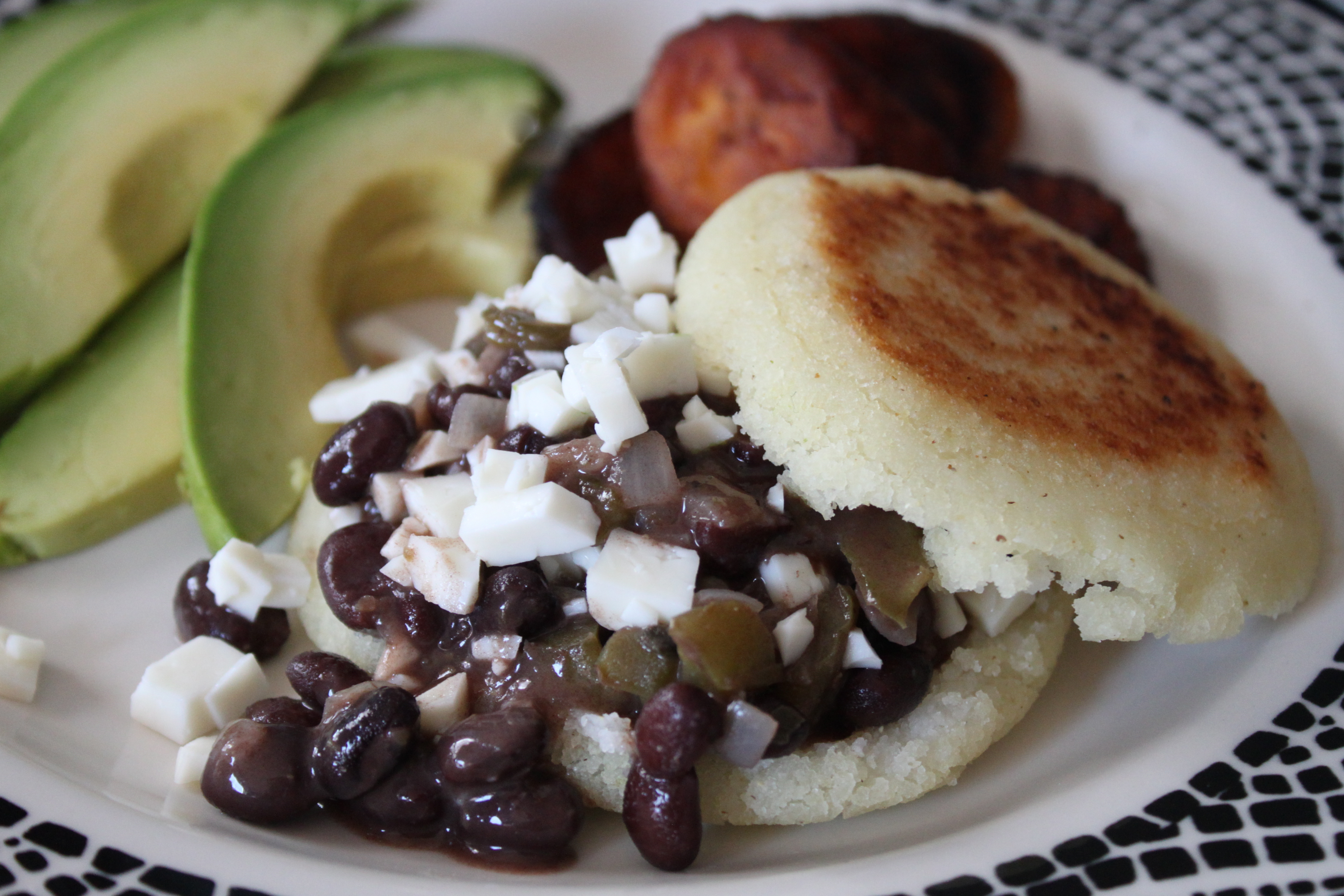
Now that I thought I had the right arepa pan, I was dying to test it out.  An increasingly popular street food trend, I wanted to master making them at home so I could have them with leftover guisados and the Colombian cheese I could only buy as a wheel.  Generally, I prefer the peaceful precision of baking, so I decided to follow the directions on the package and stuff them with ropa vieja I had left from earlier this week.  The results were disappointing, a little too messy, and definitely too raw.

img_1560
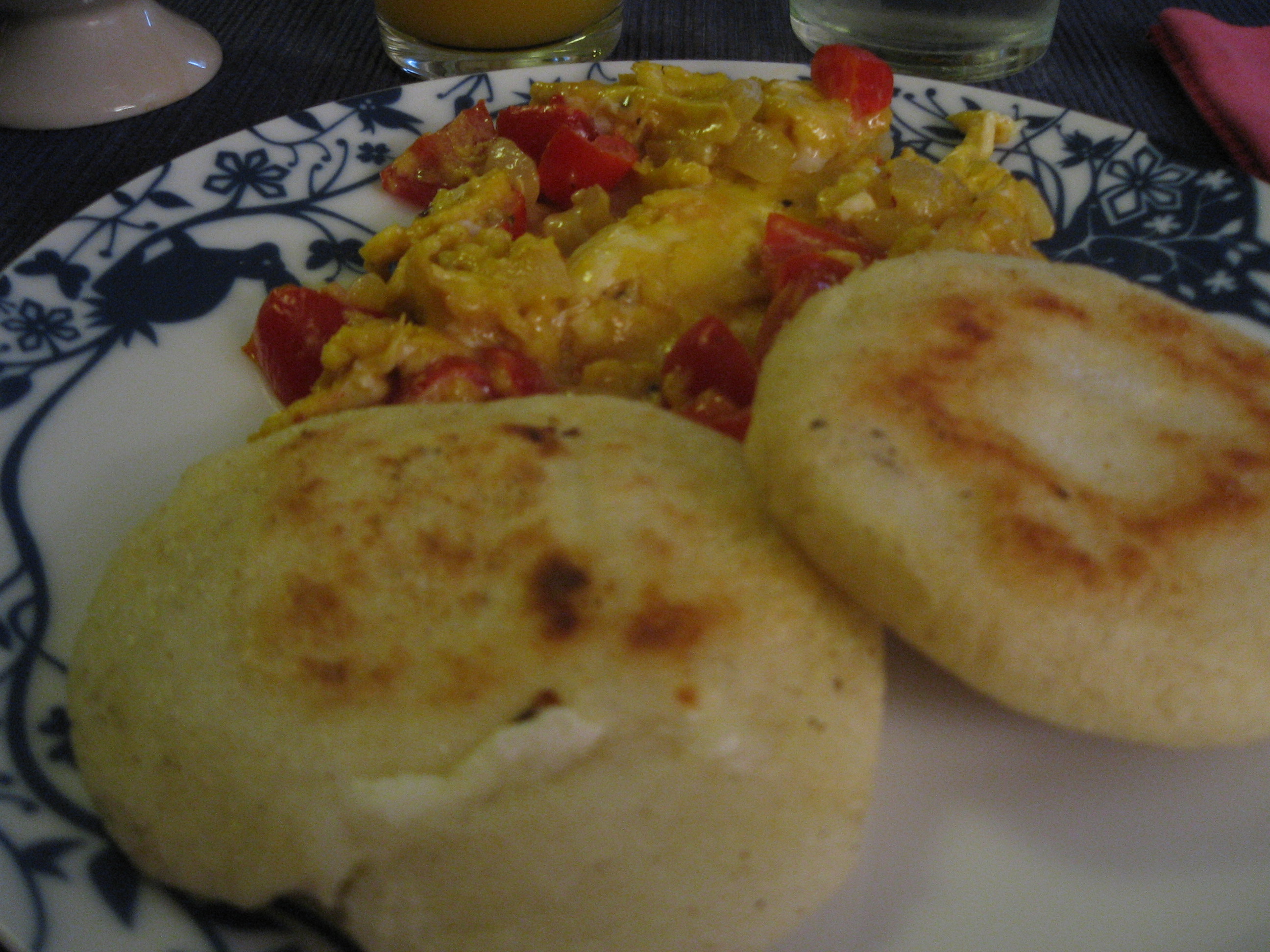
I reached out to my Venezuelan cousins for the basic arepa recipe they grew up eating.  Outside of specifying P.A.N. pre-cooked cornmeal, they weren’t exacting about measurements; but I got a sense of what to look for and loved the result.  I tried again it again this morning and served them with venezuelan perico, scrambled eggs with onions and tomatoes.

Kakos’s Arepas*
Preheat the oven to 325 degrees.

img_1544You put about a cup of very hot water in a bowl and then add the P.A.N. harina little by little as you mix it with the water.  If you add it all at once it will take longer and be lumpy.  Let it sit for five minutes so that it has the consistency of playdough but a bit softer.

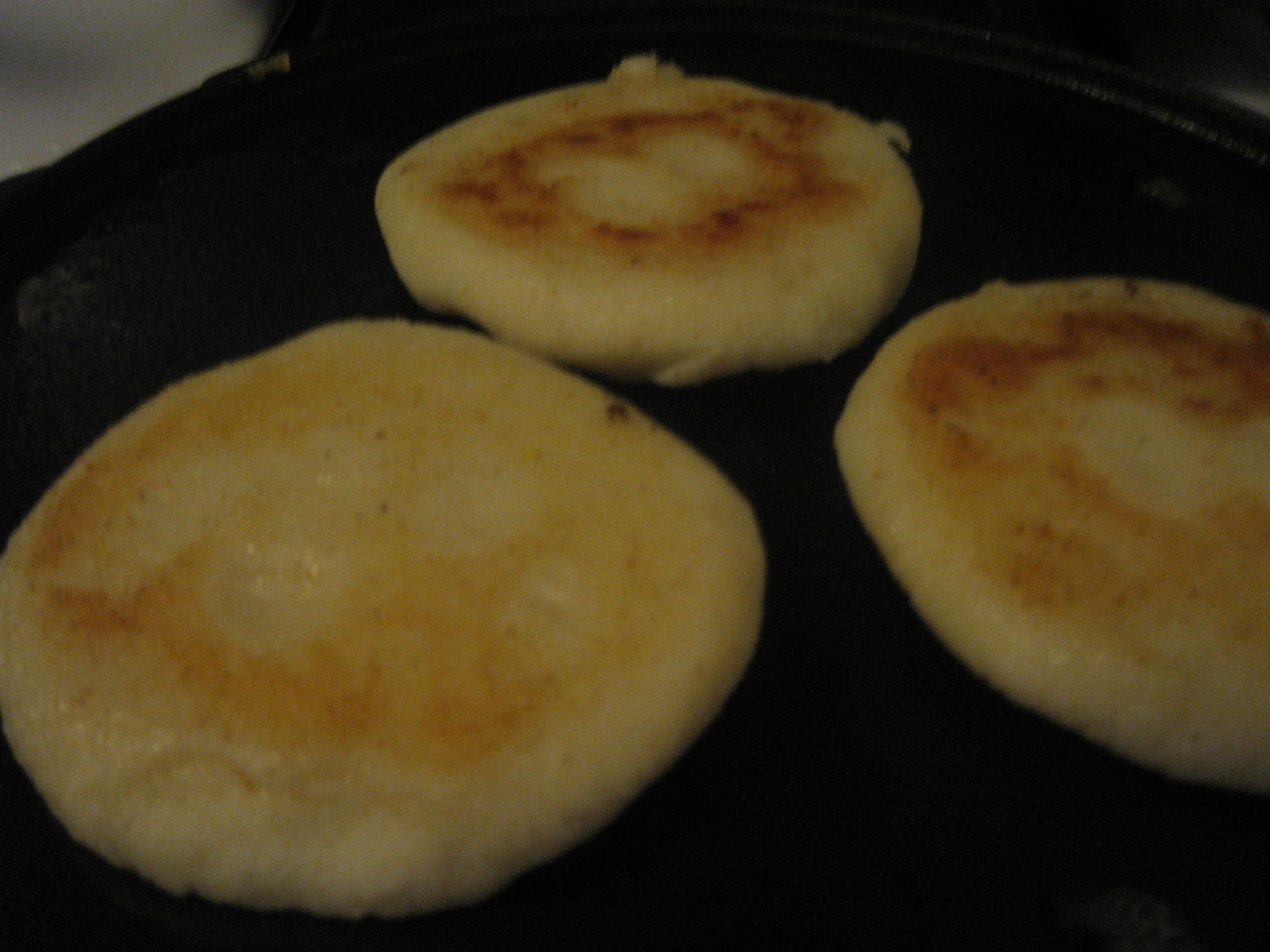
Once you have it right, you roll the mix into a golf balls then start to flatten the balls into a disc shape. If the edges crack a lot then you have to add more water to the mix and start over, but a little cracking is okay.

Get a pan, heat it up and add butter then cook the arepas so that the outside is crunchy. A few of minutes on each side.

Place the arepas in the preheated oven for about 15-20 minutes. You’ll know when they’re ready when you take them out of the oven if you pat them on top and they sound hollowish.

Time to eat!

Makes 6-8 medium sized arepas.

*Kako and I attended elementary school together which should explain the references to playdough and why I still call a 34-year old, well-travelled, married cinematographer named Carlos as Kako.


Categories

Follow hungry sofia

Bookmark and Share
icc_blog_revised2


March 2010
S M T W T F S
« Feb    
 123456
78910111213
14151617181920
21222324252627
28293031